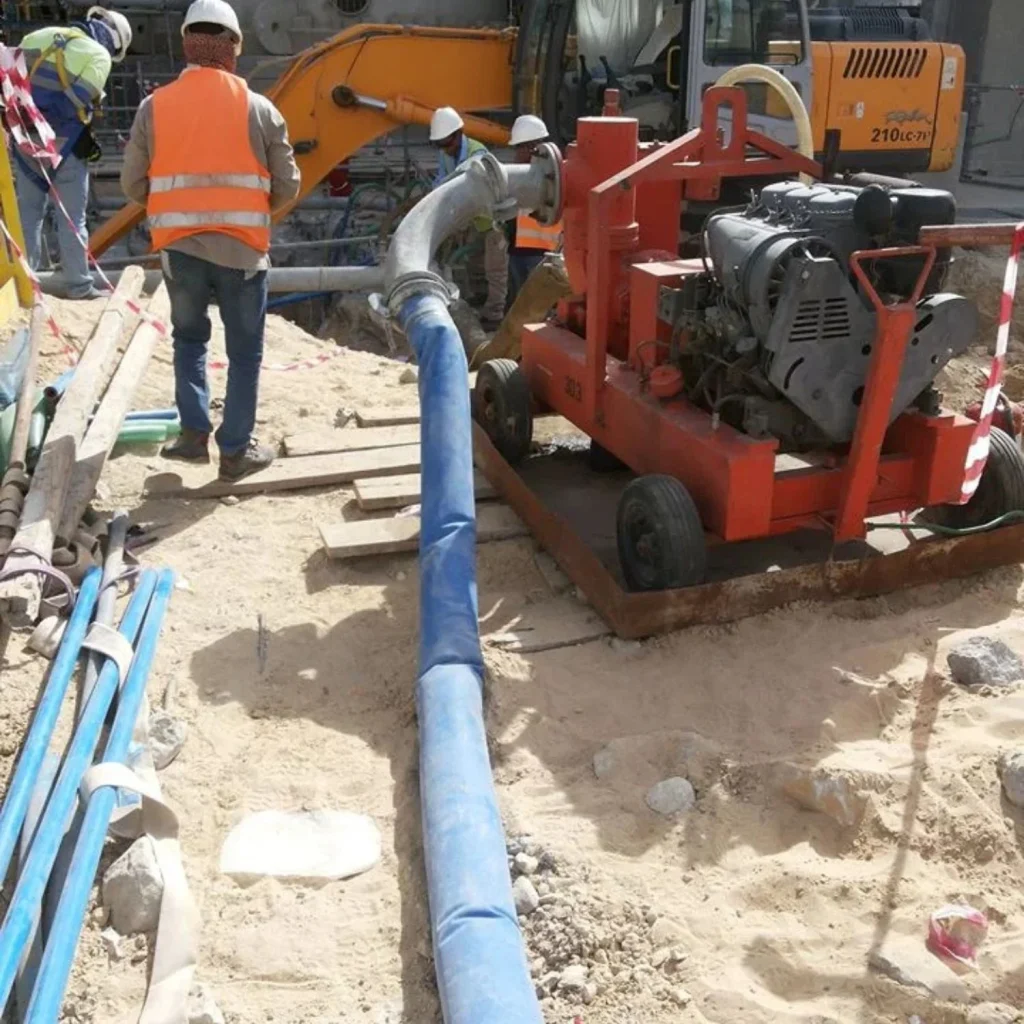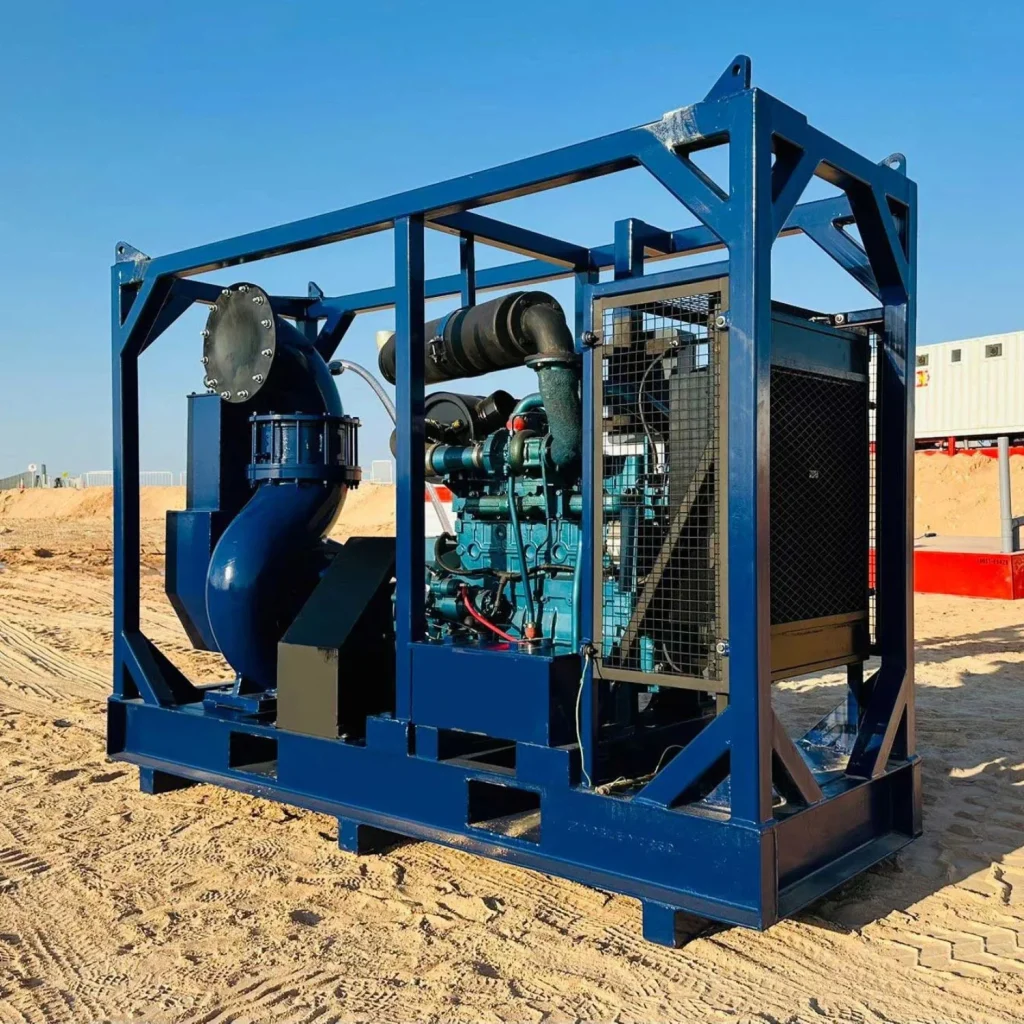

Open Impeller vs Closed Impeller in Dewatering Pumps
When choosing a dewatering pump, most contractors naturally look at flow rate, head, engine power and pump size. But there is another component inside the pump that can have a major impact on how the pump performs: the impeller.
The impeller is the rotating component that transfers energy to the water and helps move it through the pump. Different impeller designs are available for different pumping requirements.
Among them, open impellers and closed impellers are two commonly used designs in dewatering pumps.
So, what is the difference between an open impeller and a closed impeller? Where is each type normally used? What are their key advantages? And why would a contractor choose one over the other?
This guide explains these differences in simple terms, so you can understand which impeller design may be more suitable for a particular dewatering application in India.
The simplest way to understand the difference is to look at the structure of the impeller.
An open impeller has vanes that are exposed, without a full shroud covering the vanes.
A closed impeller has its vanes enclosed between front and rear shrouds.
This structural difference affects how each impeller interacts with the pumped fluid.
| Feature | Open Impeller | Closed Impeller |
|---|---|---|
| Impeller structure | Exposed vanes | Vanes enclosed by shrouds |
| Solids handling | Generally suitable for fluids containing suspended solids, depending on design | Generally better suited to cleaner fluids |
| Hydraulic efficiency | Can vary depending on design and clearance | Often offers high hydraulic efficiency in suitable applications |
| Typical use | Construction dewatering, drainage and water containing suspended particles | Cleaner water transfer and applications where efficiency is important |
| Maintenance consideration | Easier access to vanes in many designs | Requires attention to clearances and wear |
| Application flexibility | Useful for demanding dewatering conditions | Useful for relatively cleaner pumping conditions |
The exact performance depends on the impeller geometry, pump design, operating point and fluid being pumped. Therefore, the impeller should always be considered as part of the complete pump system rather than as an isolated component.
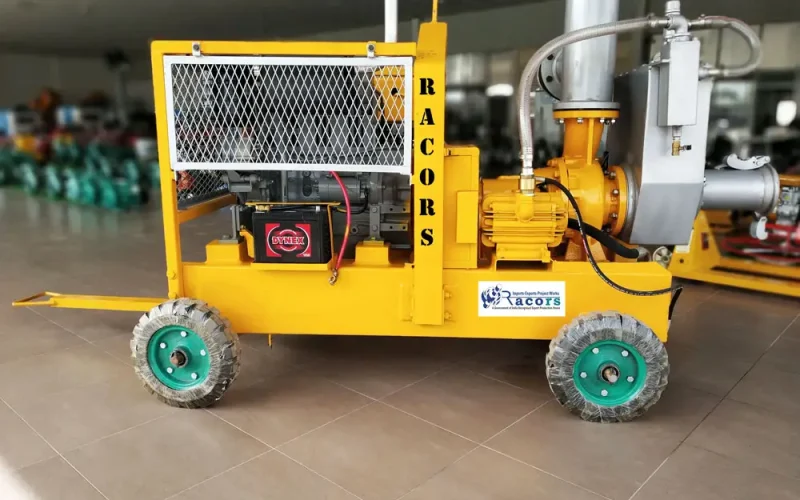
An open impeller is often considered when the pumped water may contain suspended particles or when the application requires greater flexibility.
Construction water is rarely perfectly clean. Depending on the site, it can contain silt, sand, mud and other suspended material.
For this reason, open impeller designs can be useful in certain dewatering applications.
Key Features of Open Impellers
The vanes of an open impeller are exposed rather than enclosed by a complete shroud. This gives the impeller a relatively open flow path.
Depending on the pump design, this can make the arrangement suitable for water containing suspended particles.
Another practical advantage is accessibility. Because the impeller vanes are more exposed, inspection and cleaning can be relatively straightforward on suitable pump designs.
However, the actual solids-handling capability should always be confirmed from the pump manufacturer’s specifications.
Open impeller pumps can be considered for applications where water quality and suspended solids are important factors.
For example, a construction contractor working on an excavation in Coimbatore may encounter groundwater mixed with soil and silt. A similar situation can occur during foundation work in Hyderabad, drainage projects in Mumbai, or infrastructure construction in Pune.
The same principle applies to projects in Chennai, Bengaluru, Ahmedabad and other rapidly developing construction locations across India.
Open impeller designs can therefore be relevant to:
- Construction-site dewatering
- Excavation dewatering
- Foundation dewatering
- Drainage applications
- Floodwater removal
- Temporary water transfer
- Infrastructure projects
- Industrial water handling
The appropriate pump should always be selected according to the actual water condition and required duty point.
A closed impeller has its vanes enclosed between shrouds.
This design provides a more controlled hydraulic passage through the impeller and is widely used in centrifugal pumping applications where the pumped liquid is relatively clean.
For suitable water conditions, closed impellers can provide strong hydraulic performance and efficiency.
They are commonly considered when the fluid does not contain significant quantities of large suspended solids that could interfere with the impeller passages.
The enclosed vane arrangement creates a defined passage through the impeller.
This design can provide good hydraulic efficiency when the pump is operating within its intended duty range.
Because the internal clearances are important to performance, correct pump selection and maintenance are particularly important.
A closed impeller is therefore often a strong choice when the application involves relatively clean water and the primary requirement is efficient water transfer.
There is no single impeller design that is best for every dewatering application.
The better choice depends on the water condition, required flow, head, solids content and overall operating environment.
If the water contains suspended solids and the application involves demanding construction or drainage conditions, an appropriately designed open impeller dewatering pump may be more suitable.
If the water is relatively clean and hydraulic efficiency is a major priority, a closed impeller dewatering pump may be a better fit.
The pump manufacturer should evaluate the actual duty before making the final recommendation.
Open and closed impellers are not the only impeller designs available.
Different pump manufacturers use different impeller configurations depending on the intended application.
Semi-Open Impeller
A semi-open impeller sits between open and closed designs. It provides some support around the vanes while maintaining a relatively open flow path.
It can be considered for applications where moderate solids handling and hydraulic performance are both important.
Vortex Impeller
A vortex impeller creates a strong swirling flow inside the pump casing. It is commonly associated with applications where solids handling and reduced contact between the impeller and solids are important.
Mixed-Flow Impeller
A mixed-flow impeller combines characteristics of radial-flow and axial-flow pumping. It can be suitable for applications requiring substantial flow at moderate head.
Axial-Flow Impeller
Axial-flow impellers move fluid primarily in the direction of the pump shaft. They are generally considered for high-flow, relatively low-head applications.
Semi-Open and Special-Purpose Designs
Some manufacturers develop specialized impellers for particular fluids, solids concentrations, flow requirements or industrial processes. Material selection and impeller geometry can vary significantly depending on the application.
Although these designs are important to understand, open and closed impellers remain particularly relevant when discussing conventional centrifugal dewatering pump applications.
The difference between an open impeller and a closed impeller may appear simple, but it can have an important effect on pump suitability.
An open impeller provides an exposed vane arrangement that can be useful in certain construction dewatering and water-handling applications, particularly when suspended particles are present.
A closed impeller provides an enclosed hydraulic passage and can offer excellent efficiency when pumping relatively clean water under suitable operating conditions.
For contractors, the key question should not simply be, “Which impeller is better?”
The better question is:
“Which impeller is better for the water and pumping conditions on my site?”
Once the water condition, flow rate, head, suction requirements and operating environment are understood, selecting the appropriate dewatering pump becomes much easier.
For construction and industrial projects across India, Racors can help identify a suitable pump configuration based on the actual project requirements.
F.A.Q.
Neither is universally better. An open impeller may be more suitable for certain construction dewatering applications where suspended solids are present, while a closed impeller can be preferable for relatively clean water. The final choice depends on the application.
An appropriately designed open impeller can be suitable for some muddy or solids-containing water applications. However, the pump’s specific solids-handling capability must be checked before operation.
Yes. Closed impellers can be used for construction dewatering when the pumped water is relatively clean and does not contain solids that could obstruct or damage the impeller passages.
Key advantages can include an open flow path, suitability for certain suspended-solid applications, easier access for inspection on suitable designs and flexibility for various construction dewatering conditions.
Consider the water quality, suspended solids, required flow, total head, suction conditions, operating hours and application. The pump manufacturer’s technical specifications and pump curve should be used for final selection.
Yes. Racors is an Indian pump manufacturer supplying dewatering pump solutions for construction, industrial, infrastructure and water-management applications.