
Centrifugal Diesel Dewatering Pumps: Applications, Selection and Performance
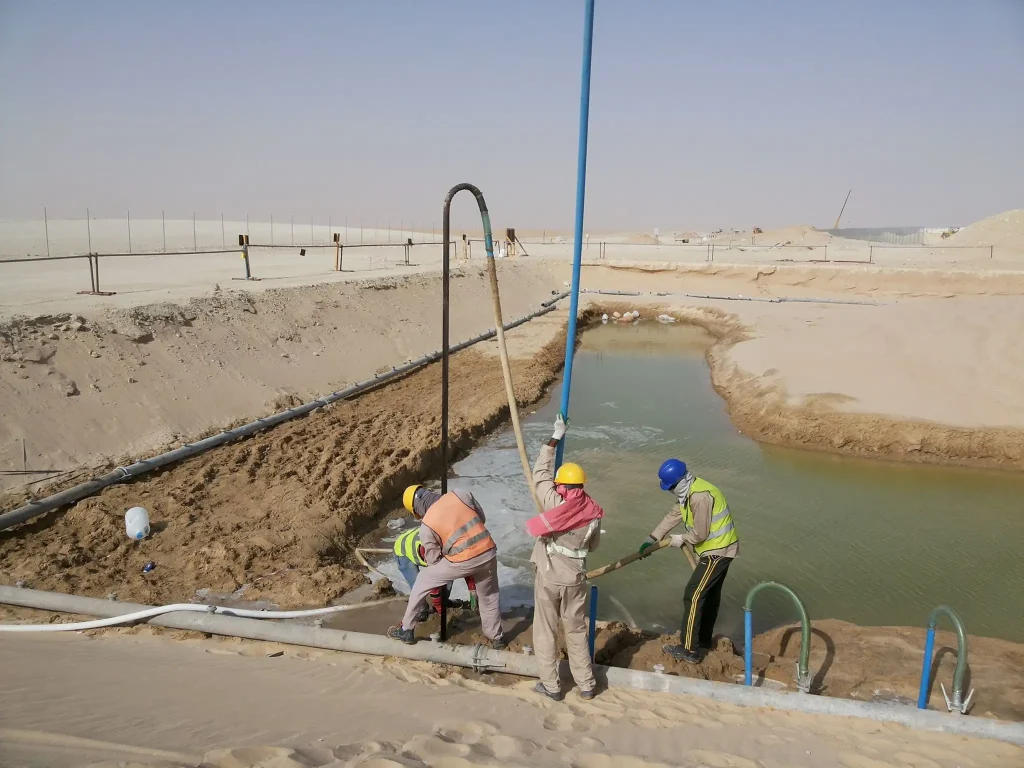
Water management is an important part of construction, infrastructure and industrial projects.
Excavations, foundations, trenches and temporary work areas can collect groundwater, rainwater or surface water. If this water is not controlled properly, it can affect site access, construction activities and project schedules.
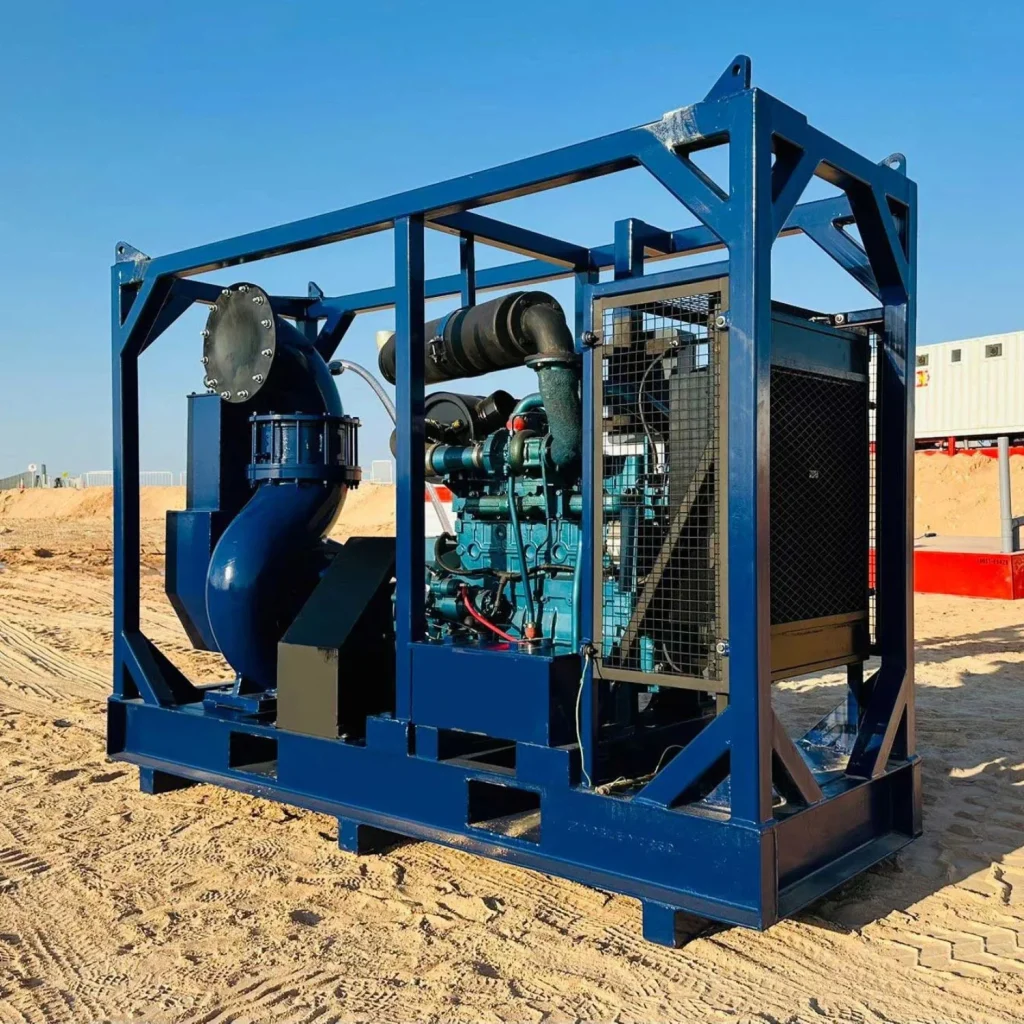
Centrifugal diesel dewatering pumps provide a practical solution for projects where high-volume water removal, mobility and independent power operation are required.
Diesel-driven pump systems can be particularly useful on remote construction sites or locations where electrical power is unavailable, unreliable or difficult to install.
The correct pump should always be selected according to the actual hydraulic duty, including flow rate, total head, suction conditions, water quality and operating requirements.
Jubail is widely associated with major industrial, construction and infrastructure activity.
Large projects can involve excavation, drainage, utility installation, pipeline work and industrial construction.
These environments can require dependable water-control equipment capable of operating for extended periods.
For Jubail dewatering projects, contractors should evaluate pump capacity, head, suction conditions, solids handling and service requirements before selecting the equipment.
A high-capacity pump is not automatically the best choice.
The better approach is to select a pump that can reliably reach the required duty point while maintaining suitable operating conditions.
1. Excavation Dewatering
Excavation areas can collect groundwater and surface water during construction.
A centrifugal dewatering pump can remove accumulated water and help maintain a workable excavation area.
This is particularly important when contractors need to keep foundations, trenches and working areas accessible during construction.
The pump capacity should be matched to the expected water inflow and required discharge conditions rather than selecting equipment only according to pipe or outlet size.
2. Foundation Dewatering
Foundation construction often requires controlled water levels.
Excess water can interfere with excavation, reinforcement installation, concrete preparation and other construction activities.
A correctly selected construction dewatering pump can help contractors manage water during different stages of foundation work.
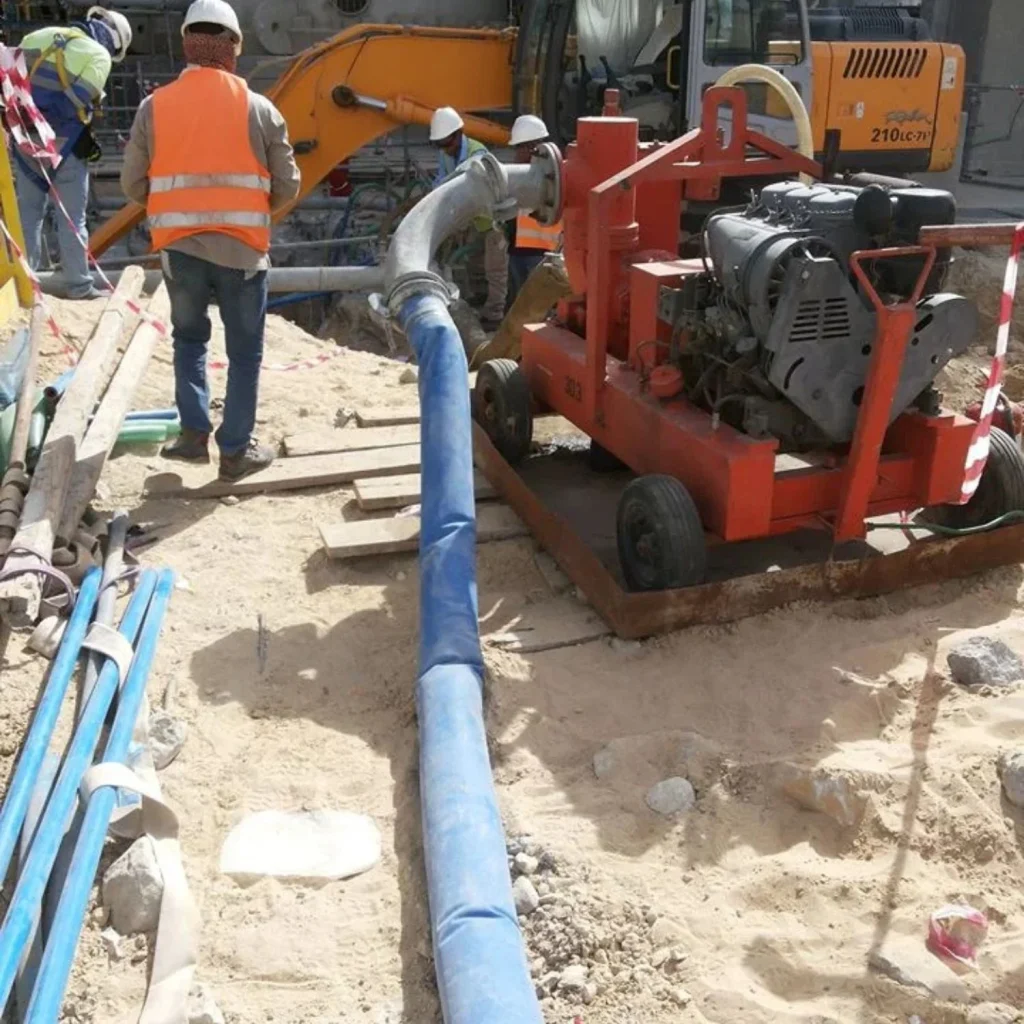
Depending on the project conditions, the pumping arrangement may include a diesel-driven pump, suction hose, discharge hose, strainer and suitable couplings.
3. Pipeline Trenching
Pipeline projects can involve long trenches with changing soil and groundwater conditions.
Water may enter the trench from groundwater, rainfall or nearby drainage systems.
Diesel-driven centrifugal pumps can be useful where pumping equipment needs to be moved as pipeline installation progresses.
The suction arrangement, discharge distance and required head should be evaluated before selecting the pump.
4. Road and Infrastructure Projects
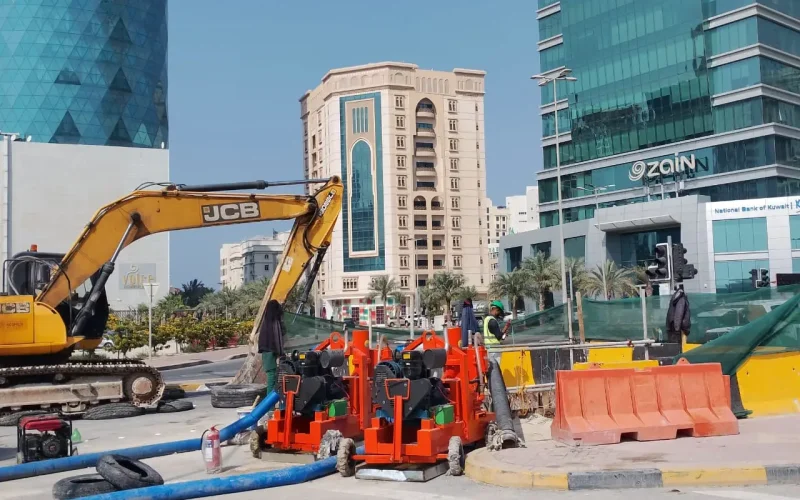
Road construction, bridges, drainage systems and infrastructure projects may encounter temporary water accumulation.
Portable diesel dewatering pumps can provide a practical pumping solution where permanent drainage or pumping infrastructure is not yet available.
Their mobility can also be useful when contractors need to relocate pumping equipment between different sections of a project.
5. Floodwater Removal
High-capacity centrifugal pumps can also be used for emergency drainage and floodwater management.
The correct pump must be selected according to the volume of water, required discharge distance, suction conditions and discharge head.
For floodwater applications, contractors should also consider debris, suspended solids, access conditions and the time required to remove the accumulated water.
Pump selection should therefore be based on actual site conditions rather than maximum advertised flow alone.
6. Industrial and Marine Applications
Industrial facilities, coastal projects and marine works may require temporary water transfer or dewatering.
In these environments, pump construction materials, corrosion protection, solids handling and maintenance requirements become particularly important.
Racors offers pump configurations with different construction and material options for various operating requirements, including stainless-steel components on selected models.
The appropriate material selection should depend on the characteristics of the water and the operating environment.
Dammam is an important industrial and commercial centre in Saudi Arabia’s Eastern Province.
Construction, infrastructure, industrial and utility projects can create a range of temporary water-management requirements.
For a project in Dammam, the right centrifugal diesel-driven dewatering pump should be selected according to the actual hydraulic requirement rather than simply choosing a pump based on outlet diameter.
Important considerations include:
- Excavation depth
- Groundwater level
- Required flow rate
- Discharge distance
- Total dynamic head
- Suction lift
- Water quality
- Suspended solids
- Required operating hours
- Fuel availability
- Maintenance support
A properly selected dewatering system can help contractors maintain safer and more workable construction areas while controlling unwanted water accumulation.
Al Khobar has strong commercial, industrial and infrastructure activity within Saudi Arabia’s Eastern Province.
Projects involving excavation, foundations, utilities and civil construction may require temporary groundwater and surface-water control.
A diesel-powered centrifugal pump can be particularly useful when the project requires a mobile pumping solution or when electrical power is not readily available at the pumping location.
Depending on the site conditions, the complete pumping arrangement may include:
- Diesel-driven centrifugal pump
- Suction hose
- Discharge or layflat hose
- Suction strainer
- Couplings
- Appropriate fittings
- Fuel system
- Pump mounting arrangement
The exact combination depends on the hydraulic duty, water conditions, site layout and operating requirements.
Choosing a pump should always start with the actual site conditions.
A pump with a larger discharge connection is not necessarily the correct pump for every application.
The required flow, total head, suction conditions and water characteristics should be evaluated first.
Step 1: Estimate the Water Inflow
Determine approximately how much water needs to be removed per hour.
The required flow rate is normally expressed in: m³/hr or litres/minute.
Consider groundwater inflow, rainfall, leakage and other potential sources of water entering the excavation or work area.
Do not select the pump only by looking at the suction or discharge diameter.
Step 2: Calculate the Total Head
Total head includes more than the vertical height between the pump and discharge point.
It can include:
- Static lift
- Discharge elevation
- Pipe friction
- Hose friction
- Fittings
- Valves
- Other system losses
The pump should therefore be selected based on the complete hydraulic duty point.
Correct head calculation helps prevent selecting a pump that delivers a high flow at one condition but cannot achieve the required performance at the actual site head.
Step 3: Check Suction Lift
Surface-mounted centrifugal pumps have practical limits on suction lift.
Long suction hoses, excessive bends, undersized hoses and poor installation can reduce pumping performance.
Racors publishes up to 9 m maximum suction lift on several pump models, but actual usable suction performance depends on site conditions, atmospheric pressure, water temperature, hose arrangement and installation.
Where possible, keeping the pump close to the water source and minimizing suction restrictions can help improve operating conditions.
Step 4: Consider Solids in the Water
Construction water is not always clean.
It may contain:
- Sand
- Silt
- Mud
- Small stones
- Construction debris
- Suspended solids
The pump’s impeller, casing and internal passage design should therefore be checked before pumping water containing solids.
The water characteristics should be communicated to the pump supplier so the appropriate pump configuration can be considered.
Step 5: Consider Operating Hours
If the pump will run continuously, engine cooling, fuel capacity, lubrication and maintenance access become important.
Racors lists 24-hour continuous-functioning capability on several published pump models, but the actual duty should always be matched to the specific model and operating conditions.
For extended operation, contractors should also consider:
- Preventive maintenance
- Engine oil and coolant checks
- Fuel planning
- Pump inspection
- Seal condition
- Hose condition
- Coupling condition
- Access for servicing
A well-planned maintenance schedule can help reduce unexpected downtime during critical dewatering operations.
Why Choose Racors Centrifugal Diesel Dewatering Pumps?
Racors provides diesel-driven dewatering pump configurations for construction, infrastructure, industrial and water-management applications.
The available configurations can be selected according to pump size, engine arrangement, mounting requirements and project conditions.
Key considerations include:
- Multiple pump sizes
- Diesel-driven configurations
- Self-priming options
- Portable mounting arrangements
- Skid-mounted options
- Silent canopy configurations
- Towable trolley options
- Selected stainless-steel component options
- Industrial and construction applications
- Service and maintenance support
The correct configuration should always be determined from the actual site duty rather than selecting equipment based only on nominal pump size.
A centrifugal diesel dewatering pump can provide a flexible and practical solution for construction, excavation, foundation, pipeline, infrastructure, flood-control, industrial and marine water-management applications.
However, choosing the correct pump involves more than selecting a pump based on its discharge size or maximum flow.
Contractors should evaluate:
- Required flow
- Total dynamic head
- Suction lift
- Water quality
- Solids content
- Operating hours
- Engine power
- Priming system
- Mounting requirements
- Hose and fitting arrangement
- Maintenance requirements
For projects in Dammam, Al Khobar, Jubail and other Saudi Arabian locations, the correct pump selection should be based on the actual hydraulic duty and site conditions.
Looking for a centrifugal diesel dewatering pump for your project? Contact Racors to discuss your required flow, head, suction conditions and application requirements.
F.A.Q.
A centrifugal diesel dewatering pump is a centrifugal water pump powered by a diesel engine and designed to remove or transfer water from construction, excavation, industrial and other temporary pumping applications.
Diesel-driven pumps can be useful when electrical power is unavailable, unreliable or difficult to provide at the pumping location. They can also offer mobility for temporary construction applications.
Start by determining the required flow rate, total dynamic head, suction lift, water characteristics, solids content and expected operating hours. Pump selection should be based on the complete hydraulic duty rather than discharge diameter alone.
Suction lift is the vertical distance between the water surface and the pump inlet. Excessive suction lift, long suction hoses and restrictions can reduce pump performance.
Some dewatering pumps are designed to handle water containing suspended solids, but the suitability depends on the pump’s impeller, casing, internal passages and the size and concentration of solids. The water condition should be assessed before selecting the pump.